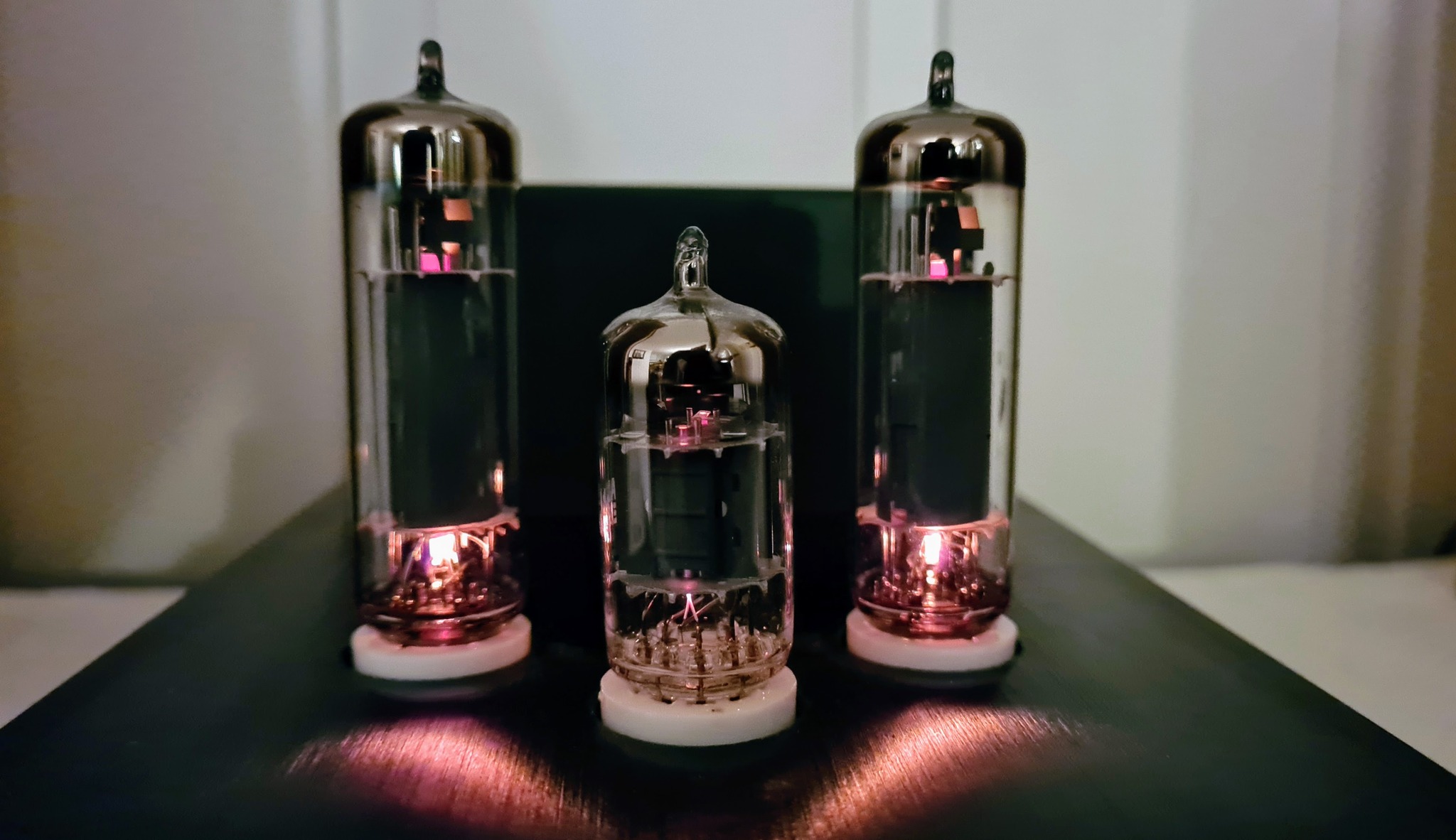
PSU voltage measurements:
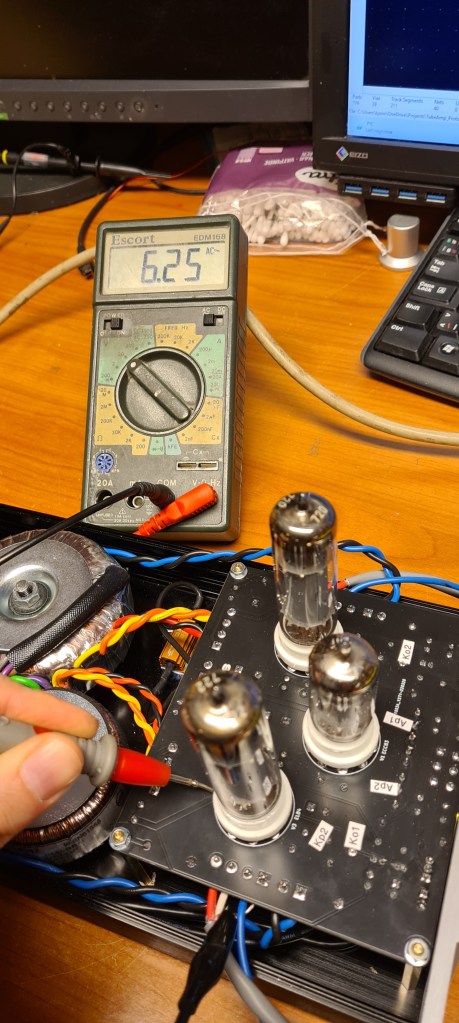
The selected filament heater transformer has a an output of 6Vrms at full load (2.5A), and 7Vrms at at no load. For an estimated load of 1.9A, I was hoping for something close to the tube filaments’ nominal voltage of 6.3V, and it turned out to be almost perfect 🙂
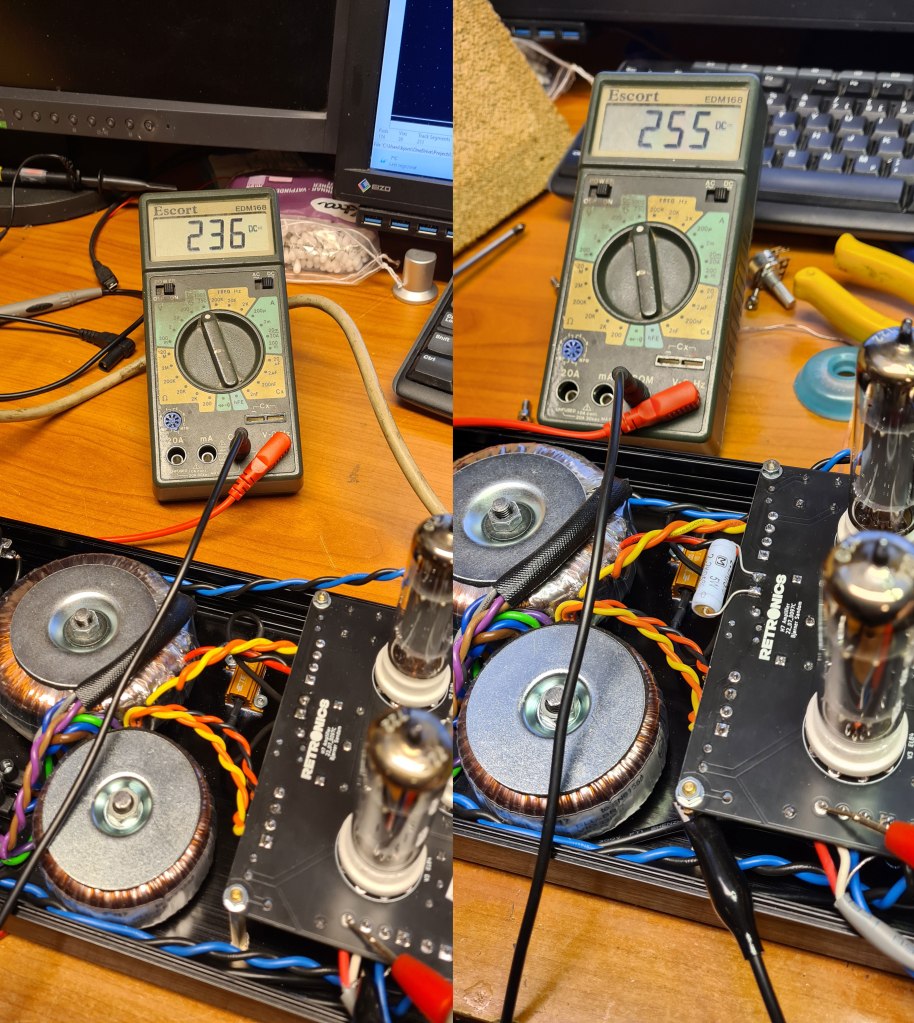
Bias point measurements:
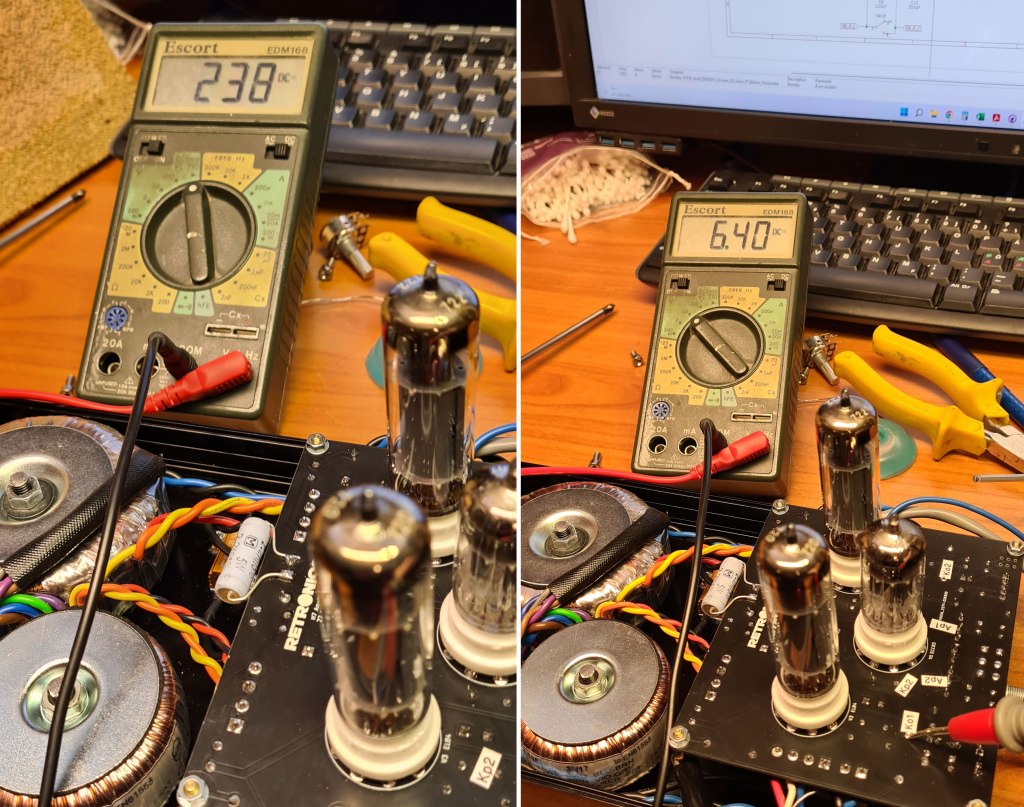
Anode voltage, supplied from the output transformers’ “low side”, is 238VDC. Over the cathode resistors of 160Ω, I measured a voltage of 6.4V. The current running through each tube is 6.4V/160Ω=40mA. Thereby, the tubes’ heat dissipation is 238V*40mA ≈ 9.5W. This means the EL84s are operating safely within their comfort zone (rated max. power = 12W).
First listen

When testing an amplifier right after repair, or in this case right after building it, I prefer to use a pair of loudspeakers that I’m willing to sacrifice, in case something wrong should happen. This pair looks like junk, but sounds allright.
With a tube amp, there is no risk for DC ruining the woofers, but high pitch oscillations might destroy the tweeters. In this case, nothing went wrong, and the amp sounded well, with no annoying hum or other noise.
Measuring output power:
As dummy loads, I used a pair of 3.3Ω power resistors. Both audio inputs were fed from a function generator.
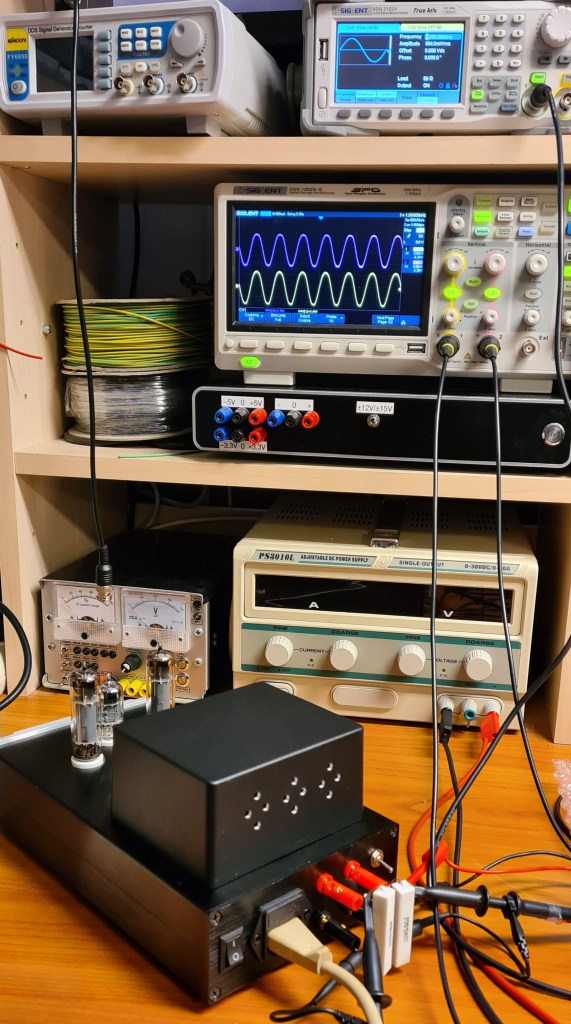
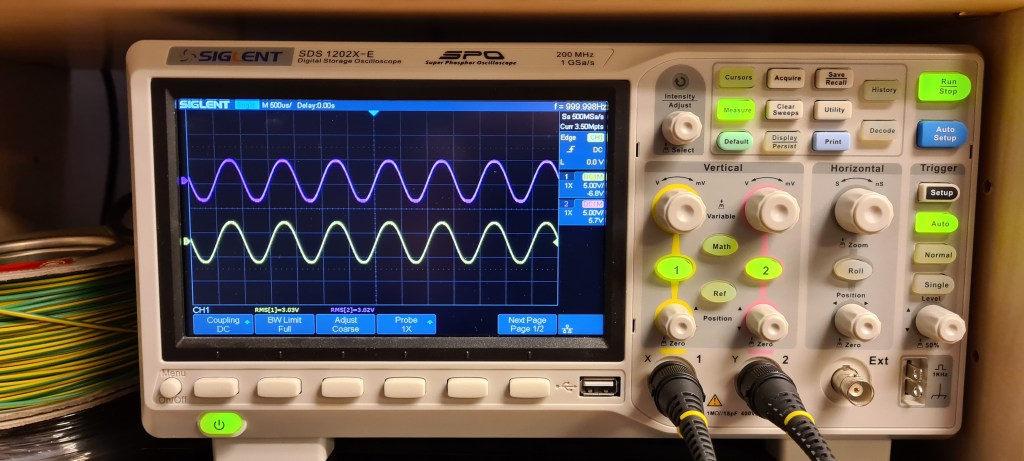
Clipping started around 3Vrms output, which means the output power is a little less than 3W. It may not sound like much, but when using a pair of high sensitivity speakers, it’s enough to fill a living room with music at a decent listening level. I may try to tweak the amps operating point later, to se if it’s possible to squeeze out a little extra power, but for now this is allright.
Measuring frequency response:

With a function generator as audio source, I started with 1kHz and set the amplitude to a level where the amp delivered 1V at the outputs. Then I adjusted the frequency up and down until the output voltage dropped 3dB (to about 0.7V). The frequency at -3dB points were 20kHz and 15Hz respectively, meaning the amp’s frequency range is 15Hz-20kHz. Not bad for a first timer.
How does the amp sound? Check out the next post for a short demonstration.

 Retronics
Leave a comment