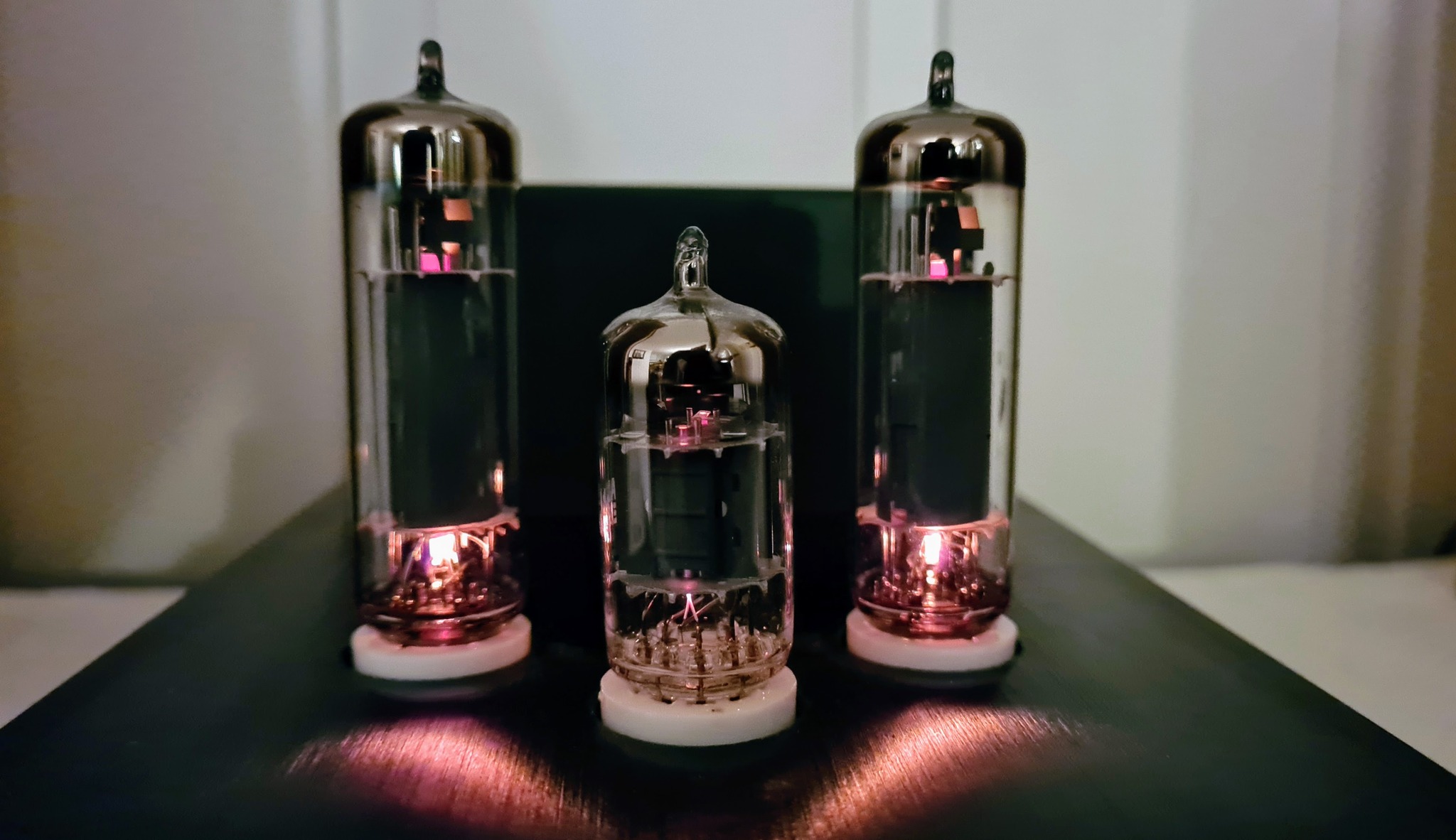
When electrolytic capacitors are unused for a long time, the dielectric made of aluminium oxide may deteriorate, allowing DC current to flow -> the capacitors become leaky. A basic capacitor tester is unable to measure this leak, but it may show confusing results. In this case, I am testing an electrolytic capacitor inside a radio from late 1930s, which has probably not been powered up for several decades. Before measurement, the capacitor is disconnected from the rest of the circuit. It’s nominal value is 20µF, but the capacitor tester shows more than 30µF. Capacitors from that time were manufactured with wide tolerances, so 30µF could have been the actual capacitance. However, I suspected that the test result was influenced by capacitor leakage.
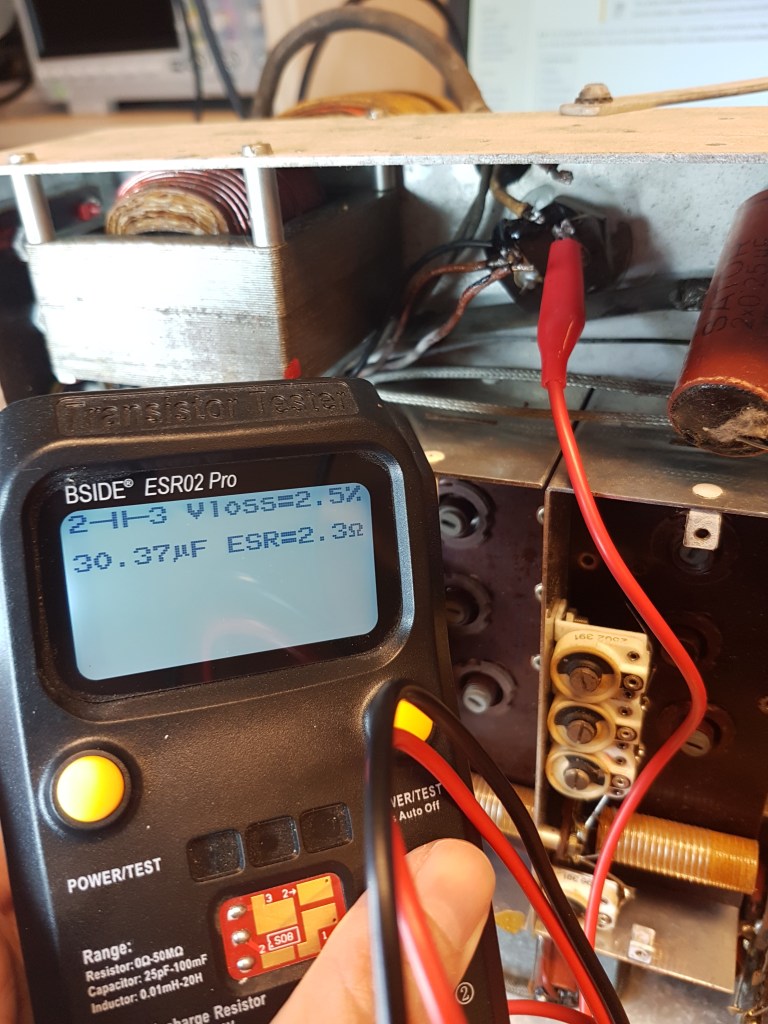
To find this out, I connected the leakage tester and gradually increased the output voltage towards 350V (the capacitor is rated for 450V). In the beginning the 5mA current limit was reached because of the charging of the capacitor. After the initial charging of the cap, there was still a major current draw. This picture is taken after 20 secs, and the leakage current is about 4.5mA, which is a lot.
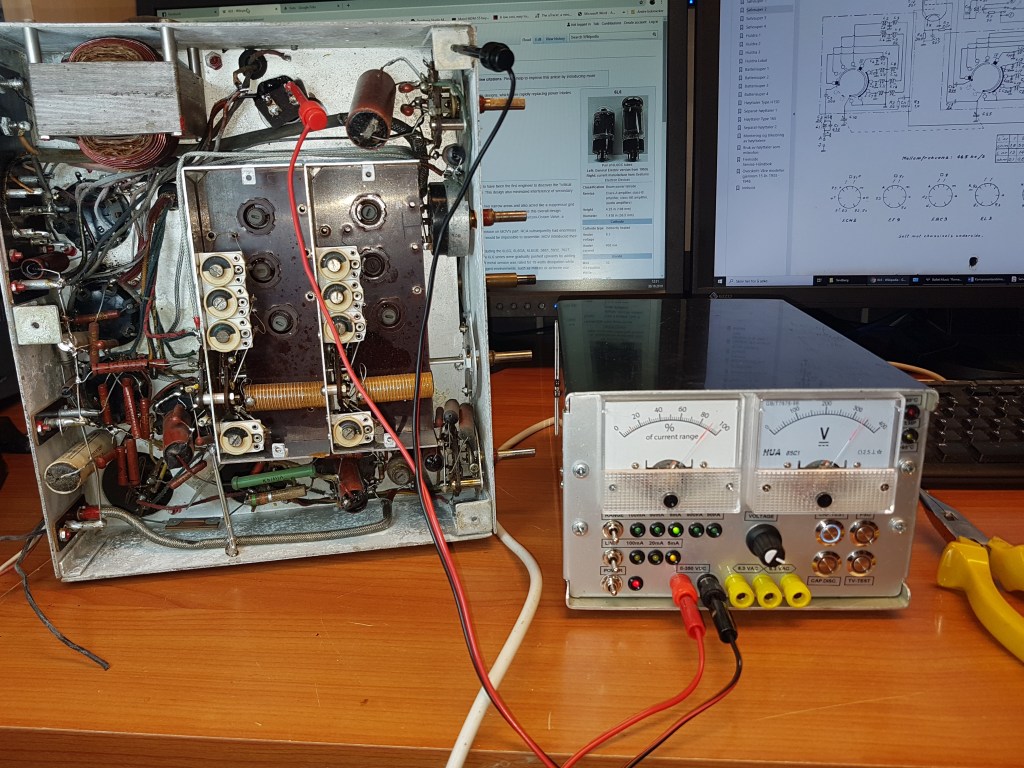
I left the voltage on for a long time. After 15 minutes the leakage current had dropped to 1mA. Way better, but still too much compared to the max. allowable leakage current chart found on this page: http://www.tpub.com/celec/54.htm For a capacitor of this capacity and voltage rating, a leakage of less than 500µA is to be expected.

It’s getting better. After 1 hour: 120µA leakage, and after 3 hours: 50µA. Now we’re talking!
I properly discharged the capacitor before measuring capacitance again. Now the meter shows a much more trustworthy value than before.

The more than 80 years old capacitor now was healthy again, and worked well when using the radio. What had happened during the 3 hours, is that the dielectric layer of aluminium oxide was restored in a process called reforming.
The described procedure only applies to electrolytic capacitors, not film capacitors.
Other usages for this device:

 Retronics
Leave a comment